

In an age where your smartphone might know you better than your nearest neighbour, it’s no wonder we’re exploring what Australia’s digital culture and habits really look like in 2025. From social media routines to streaming binges, digital payments to smart-home devices, Australians are living their lives online in ways both familiar and surprising. This post will dive into those habits, unpack what they reveal about our culture, and offer insight into how you can reflect on your own digital life (with a little humour—yes, your scroll-habit might have a few secrets).
Quick Overview: “Key Takeaways”
- Over 97% of Australians are online, and about 77% are active on social media. (Meltwater)
- Aussies spend an average 1 hour 51 minutes per day on social media alone. (Meltwater)
- Nearly 3 in 4 Australians worry about spotting fake information and data privacy online. (We Are Social UK)
- Digital habits are shaping everything from how we work and shop to how we socialize, entertain and even relax.
Want to dig into the specifics of what we’re doing online, why it matters, and how you can make the most of it? Keep reading!
1. The Digital Landscape: Who’s Online and What They’re Doing
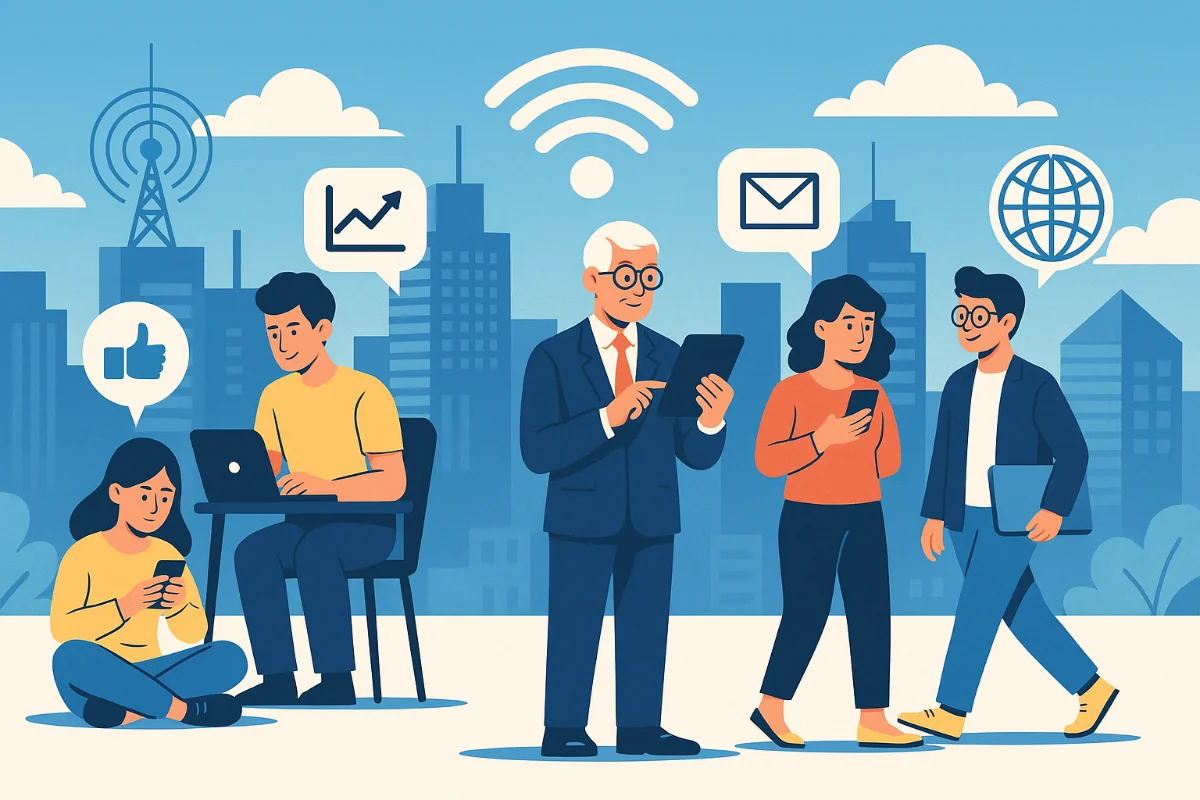
Australia in 2025: we’re connected, mobile, and scrolling.
Key stats and facts
- Australia has one of the highest internet-penetration rates in the APAC region—about 97.1% of the population online. (Meltwater)
- Social media usage is widespread. Approximately 20.8 million social media users, equating to roughly 76% of the population. (Sprout Social)
- Mobile dominates: 94.9% of users use smartphones for internet access in Australia. (Meltwater)
What Australians do online
- Browsing, banking, streaming, shopping and socialising are major activities.
- Social media platforms remain central to daily life: for news, connection, entertainment. (We Are Social UK)
- “Screenagers” (teens) are especially wired: some spend over 40+ hours a week on devices for leisure. (The Australian)
Did You Know?
Being online doesn’t just mean “having internet at home” — it means multiple devices, multiple platforms, multiple habits. The average Australian user is active across smartphone, laptop/desktop, social and streaming apps.
If you’re not thinking about your digital life as part of your culture (not just “tech use”), you’re missing half the story.
2. Social Media & Content Consumption: Our Online Habits
Scrolling, posting, watching, repeating. That’s our social media life.
Platform habits & generational differences
- Aussies spend on average 1 hour 51 minutes per day on social media. (Meltwater)
- Gen Z spend more time than older generations. (Sprout Social)
- Social media is increasingly a source of news—Instagram and TikTok lead for younger users. (Canberra University)
Pro Tip Box:
If the “I’ll just check one video” turns into “three hours later, where did the time go?” — not alone.
Content consumption beyond social
- Streaming is huge: many Australians use multiple services, devices, and binge-watch habits have become common.
- Online shopping & e-commerce are deeply woven into everyday habits: convenience, comparison, instant gratification. (Meltwater)
- Digital literacy, online safety and the fight against misinformation are growing concerns:
- ~74% of Australians say spotting fake information is tough. (We Are Social UK)
- Almost 1 in 4 Australians are digitally excluded—due to access, affordability or ability. (Australian Human Rights Commission)
Our devices aren’t just tools—they’re part of how we live, work, connect and play in Australia.
3. Digital Work, Learning & Everyday Life
Let’s zoom out from social and look at how digital culture has changed our routines.
Remote work & tools
- Many Australians now work from home or hybrid, which means video calls, collaborative apps, digital file sharing have gone mainstream.
- The lines between “home” and “work” blur thanks to digital connectivity.
Learning & education
- Online learning and upskilling continue to grow. The Australian Digital Inclusion Index (ADII) reached 73.2 (out of 100) in 2022, up from 67.5 in 2020. (Australian Bureau of Statistics)
- Access, affordability and ability remain critical: older adults and low-income groups lag behind.
Everyday life & the digital culture ripple
- Banking, grocery shopping, government services — most are now online or mobile.
- Smart-home tech, streaming, wearables: they’re not luxury anymore, they’re part of many households.
- But with greater convenience comes greater responsibility (and new habits).
4. Quick Guide – Realistic Example
Intro:
Consider someone—call her Laura—living in Melbourne. She works part-time, has a streaming service, social accounts, a smart speaker, and breaks for online shopping. She’s also concerned about balancing screen time and real life. Sound familiar?
Common Challenges:
- Do you feel your screen usage is creeping up without noticing?
- Are you using multiple apps/devices and losing track of time?
- Do you find it harder to “switch off” because your work and personal digital life overlap?
How to Solve It:
- Set clear boundaries: Use “do-not-disturb” modes, scheduled breaks, device-free periods.
- Design your digital diet: Choose which platforms you use for what (news, friends, video) and limit aimless scrolling.
- Use tech to manage tech: Screen-time apps, reminders, digital-wellness modes.
- Stay connected offline: Schedule face-to-face or device-free time to balance your digital culture with real-world habits.
Why It Works:
By being intentional about your digital habits, Laura (and you) can maintain the benefits of connectivity without being consumed by them. Your digital culture becomes yours, not the algorithm’s.
If you’d like help assessing your digital habits and creating a healthier digital-life balance, consider using a digital-wellness toolkit or app.
5. Interaction Survey – “What’s Your Digital Habit Profile?”
Answer the questions below; tally your ticks to see what kind of digital user you are.
- I check my phone within 15 minutes of waking up. ☐
- I spend more than 2 hours per day on social media outside work. ☐
- I’ve switched from watching broadcast TV to streaming in the last year. ☐
- I often feel like I should “just check one more thing” online. ☐
- I prefer doing tasks (banking, shopping, booking) on my phone rather than in-person. ☐
- I have at least one device that I use after “bedtime” and I regret it the next morning. ☐
Results:
- 0-2 ticks: You’re relatively balanced in the digital world—nice job.
- 3-4 ticks: You’re a confident digital user with everyday habits—just watch for overload.
- 5-6 ticks: You’re immersed in digital culture—time to review your routines and maybe add some offline breaks.
6. How Digital Culture Impacts Society & You
Let’s zoom out again and consider some bigger-picture impacts of Australia digital culture and habits.
Social connection & isolation
- Digital platforms offer connection, but also risks of isolation or superficial interaction.
- Some surveys show concerns around fake plans, avoidance of face-to-face contact and doom-scrolling. (News.com.au)
Privacy, data & inclusion
- 43% of Australians are worried about how companies handle their data. (We Are Social UK)
- Digital exclusion remains a real issue: older adults, low income groups still lag. (Australian Human Rights Commission)
Economy & business
- For businesses, digital culture means new ways to market, engage and deliver. One report shows e-commerce growth and huge digital ad spend in Australia. (Meltwater)
- For individuals, digital skills are increasingly important for work, learning and life.
Understanding digital culture isn’t just for marketers or tech geeks—it’s about how we live, connect and evolve in Australia.
7. FAQs
Q: Are older Australians using digital tech as much as younger ones?
Answer: Not quite. While internet penetration is very high overall, the Australian Digital Inclusion Index shows older age groups (75+) have significantly lower scores—48.5 in 2022 versus 82.6 for 18-34s. (Australian Bureau of Statistics)
Q: Is social media usage still growing in Australia?
Answer: Yes—but growth is slower and more nuanced. The digital market is maturing. Platforms are evolving rather than simply expanding. (Sprout Social)
Q: Should I worry if I feel I spend “too much time” online?
Answer: Possibly—but it depends on impact. If your screen habits interfere with sleep, relationships or productivity, stepping back and reflecting (like our survey above) is wise.
Q: How does digital culture affect young people’s habits?
Answer: Teenagers in Australia spend many hours on digital devices; one report estimates 40+ hours a week for some. (The Australian) With that comes benefits and risks (social connection vs sleep issues, negative online content etc).
Conclusion
Australia’s digital culture and habits in 2025 reflect a nation deeply online—but also one grappling with what that means for our time, attention, mental health and relationships. Whether you’re tweeting, streaming, chatting or shopping, your digital habits shape more than your screen—they shape your day, your community and your future. By understanding how we use tech (and why), you can make more conscious choices and stay connected without letting the digital world use you.
Disclaimer
This blog post is for general informational purposes only and does not constitute professional advice. Digital habits, device usage, online behaviour and technology impact vary by individual, age, location and circumstance. For specific guidance on digital wellness, screen-time management or technology use, consult a qualified professional.