

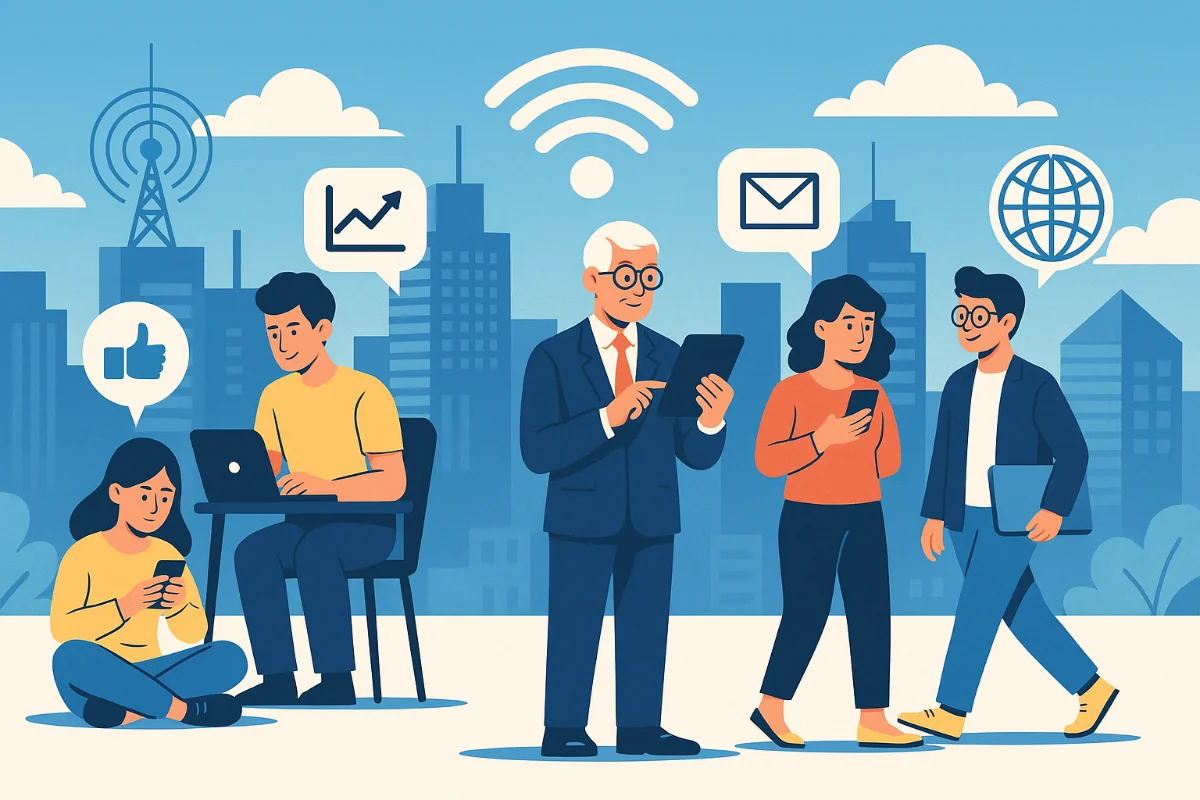
Digitalisation is Everywhere
Think about your morning routine. Did you check your phone before brushing your teeth? Order coffee via an app? Pay with your smartwatch? Congratulations—you’ve already had three encounters with the impact of digitalisation on society before 9 AM.
Digitalisation isn’t just a buzzword. It’s a sweeping change that has redefined how Australians live, work, learn, and connect. From e-commerce and telehealth to artificial intelligence and remote work, the digital shift has touched nearly every aspect of modern life.
This blog post unpacks the pros, cons, and future of digitalisation—what it means for society in Australia and beyond. And don’t worry—we’ll break it down without drowning you in tech jargon (because nobody needs another confusing lecture on “cloud ecosystems”).
Snapshot Summary: Key Takeaways
Here’s the big picture of the impact of digitalisation on society:
- Pros: Convenience, efficiency, better healthcare, access to information, flexible work, innovation.
- Cons: Privacy risks, digital divide, job disruption, screen addiction, cybersecurity threats.
- Future: AI, smart cities, personalised healthcare, sustainable tech, and deeper integration into daily life.
Want to explore how digitalisation is reshaping our world? Keep scrolling.
1. The Pros of Digitalisation
1.1 Convenience and Efficiency
Digitalisation makes life smoother. From ordering Uber Eats to managing your finances online, Australians enjoy unprecedented convenience.
Examples:
- Online banking apps replace long queues.
- Telehealth consultations save travel time.
- E-commerce delivers everything from groceries to furniture at the click of a button.
Pro Tip: If you haven’t yet embraced online bill payments, your letterbox (and your stress levels) will thank you.
1.2 Access to Information
Information has never been more accessible. Students in remote Queensland can attend online classes, and anyone can learn coding, cooking, or crochet with a quick YouTube search.
Did You Know? In 2024, Australia ranked among the top countries for internet access—over 96% of households had internet connectivity.
1.3 Innovation and Economic Growth
Digitalisation fuels innovation across industries. Fintech apps, digital farming tools, and AI-powered logistics all contribute to Australia’s economy.
Quote:
“Digital innovation adds billions to Australia’s GDP annually.” – CSIRO
1.4 Healthcare Improvements
Telehealth, electronic health records, and AI-driven diagnostics improve patient outcomes and reduce costs. Rural Australians benefit the most.
1.5 Work-Life Flexibility
Remote work and hybrid models—supercharged by digitalisation—give Aussies the freedom to balance careers and lifestyle.
2. The Cons of Digitalisation
2.1 Privacy Concerns
Every click, swipe, and search creates data. While it makes personalised ads “helpful,” it also raises privacy concerns.
Common Worries:
- Social media apps tracking habits.
- Online scams targeting the vulnerable.
- Companies mishandling personal data.
Humour break: If you’ve ever talked about shoes near your phone and then saw shoe ads within an hour—yes, that’s digitalisation at work.
2.2 Digital Divide
Not everyone benefits equally. Older Australians and rural communities often struggle with access and skills.
Fact: Around 1 in 4 Australians still lack essential digital skills for jobs and daily life.
2.3 Job Disruption
Automation and AI bring efficiency but also fears of job losses in sectors like retail, manufacturing, and even white-collar professions.
2.4 Cybersecurity Threats
Hacks, ransomware, phishing scams—digitalisation has its dark side. Businesses and individuals alike face growing risks.
2.5 Mental Health and Overuse
From screen fatigue to social media anxiety, over-digitalisation impacts wellbeing.
3. Quick Guide: Managing Digitalisation in Daily Life
The Situation
A family in Sydney loves digital convenience but worries about privacy, screen time, and future job security.
Common Challenges
- Are our kids spending too much time online?
- How do we protect personal data?
- Will automation affect our jobs?
How to Solve It
- Set Digital Boundaries: Device-free dinners, screen-time limits.
- Boost Digital Literacy: Learn cybersecurity basics.
- Balance Automation with Upskilling: Embrace lifelong learning.
- Adopt Privacy Tools: Use password managers, two-factor authentication.
Why It Works
These steps reduce risks while keeping the benefits of digitalisation.
Lesson: Don’t fear digitalisation—manage it.
4. The Future of Digitalisation in Society
4.1 Smart Cities
From smart traffic lights in Melbourne to solar-powered grids in Adelaide, smart city initiatives will redefine urban life.
4.2 AI Everywhere
Expect AI to streamline industries from healthcare to law. Think chatbots, predictive analytics, and personalised medicine.
4.3 Education Revolution
Virtual reality classrooms and AI tutors will make learning more interactive.
4.4 Sustainability
Digital solutions will help fight climate change—smart farming, energy-efficient buildings, and green data centres.
4.5 Human-Centred Tech
The future isn’t just about machines—it’s about tech designed to empower people.
5. Australian Society and Digitalisation
Australia has been quick to adopt digital solutions.
- E-Government: Services like MyGov streamline interactions.
- Digital Payments: Contactless payments dominate.
- Remote Healthcare: Telehealth expanded dramatically post-COVID.
- Digital Economy: Small businesses thrive through e-commerce.
Mini Quiz: Test Your Digital IQ
Q1. What percentage of Australian households have internet access?
- A) 50%
- B) 96%
- C) 75%
Q2. Which of these is a con of digitalisation?
- A) Telehealth
- B) Cybersecurity threats
- C) Convenience
Q3. What’s the biggest digital challenge in rural Australia?
- A) Lack of interest
- B) Connectivity and access
- C) Too much Netflix
(Answers: Q1—B, Q2—B, Q3—B)
FAQs: Impact of Digitalisation on Society
Q: Is digitalisation always positive?
Not always. It brings efficiency and innovation but also risks like privacy breaches and job disruption.
Q: How is digitalisation affecting jobs in Australia?
Automation is reshaping industries, but new opportunities are emerging in tech, AI, and digital services.
Q: What’s the role of government in digitalisation?
Governments set policies, improve access, and ensure regulations on data and cybersecurity.
Q: Can digitalisation help the environment?
Yes—through energy efficiency, smart farming, and reduced paper use.
Q: How can individuals protect themselves online?
Use strong passwords, enable two-factor authentication, and stay alert to scams.
Conclusion
The impact of digitalisation on society is undeniable—transforming everything from healthcare and education to shopping and work. While it brings immense benefits like convenience, efficiency, and innovation, it also poses challenges around privacy, equity, and wellbeing.
For Australians, the key is balance: embracing digital opportunities while managing risks responsibly. With the right strategies, we can ensure that the digital world enhances life without overshadowing it.
So next time your phone suggests a café you were just thinking about, don’t panic—it’s just digitalisation reminding you that the future is already here.
Disclaimer
This blog post provides general information only on the impact of digitalisation on society in Australia. It is not legal, financial, or professional advice. Always seek expert guidance for specific decisions.