
Building in Australia has its own unique flavour — from coastal homes overlooking the surf to high-rise flats in dense city centres. If you’re looking to understand the types of building structures Australia commonly uses (and why), you’ve landed in the right place. Whether you’re a homeowner, small investor, builder, or just curious, this guide walks you through the structural systems, their strengths, where they’re used, and how much they might cost. And yes — we’ll keep it light (no engineering-degree required) and throw in some Aussie humour because your foundation doesn’t have to be dull.
Quick Overview
At a Glance
- Australia’s most common structural systems: timber-frame, steel-frame, concrete/masonry & hybrid systems.
- For each: the strengths, typical uses, and approximate cost / cost-drivers.
- A Quick Guide example to choose the right structure for your own project.
- A mini quiz to help you identify your preferred structure type.
- Mistakes to avoid, plus FAQs to clarify everything.
Want to dive deeper? Keep reading!
1. Understanding Structural Systems in Australia
In Australia, when we refer to “building structures” we often mean the load-bearing framework of a building: the skeleton (or sometimes the whole body) of the building that supports loads (people, furniture, wind, weather) and transfers them to the ground. (yourhome.gov.au)
Why structure type matters
- It affects costs, construction time, suitability to site and ongoing maintenance.
- It influences thermal performance, acoustic insulation, termite/fire resistance — very relevant in many parts of Australia.
- It also interacts with architectural style, climate (coastal, bushfire zone, urban high-rise) and regulations.
2. Major Types of Building Structures in Australia
Let’s break down the most common types you’ll encounter, their strengths, uses, and cost considerations.
2.1 Timber-Framed Construction
What is it?
A structural system where walls, floors and roof are supported by timber frames (studs, joists, rafters). It’s often paired with cladding, plywood, etc. In Australia, timber framing remains one of the most common systems for detached houses. (jims.net)
Strengths:
- Lightweight and quick to erect → faster build time. (jims.net)
- Cost-effective compared to heavier systems.
- Versatile for architectural changes, easier to modify or renovate later.
- Good for local climate in many Australian suburban areas.
Typical Uses:
- Detached single-storey or two-storey homes in suburban/regional Australia.
- Extensions or renovations where minimal structural change is needed.
Cost Considerations / Cost Drivers:
- Timber quality (treated for termites, bushfire zone rating) can impact cost.
- Foundation type: timber structures still need appropriate footings or slabs.
- Insulation and cladding materials can add cost.
- Maintenance: in termite-prone zones, warranty and protective treatment may add long-term cost.
For example, a report indicates timber-frame construction accounted for roughly 73% of detached homes built in 2017-18 in Australia. (Forest & Wood Products Australia)
When to use it:
If your site is modest, you have a suburban lot, modest budget, and you’re building something fairly standard.
2.2 Steel-Framed Construction
What is it?
The building’s skeleton is made from steel columns, beams, and tracks. Can be used for residential, commercial, or industrial. In Australia steel framing is gaining popularity for domestic builds, especially where long spans or fast construction are required. (jims.net)
Strengths:
- High strength-to-weight ratio → supports larger spans, open spaces with fewer columns. (wasteel.com.au)
- Speed of construction, less onsite waste, often higher precision (prefab elements).
- Durable, termite and fire-resistant (especially if coated).
- Good for multi-storey or non-standard architectural forms.
Typical Uses:
- Apartments, multi-unit residential, commercial buildings.
- Homes with large open-plan designs, loft styles, or where architecture demands longer spans.
- Renovations/extensions where structural change is significant.
Cost Considerations / Cost Drivers:
- Material cost: steel is typically higher than timber per unit. (hipages)
- Specialist labour and fabrication may be required.
- Corrosion protection (especially in coastal zones) adds cost.
- Thermal bridging can impact energy performance; additional insulation may be needed.
When to use it:
When you want architectural flexibility, open span spaces, or are building multi-storey and budget allows.
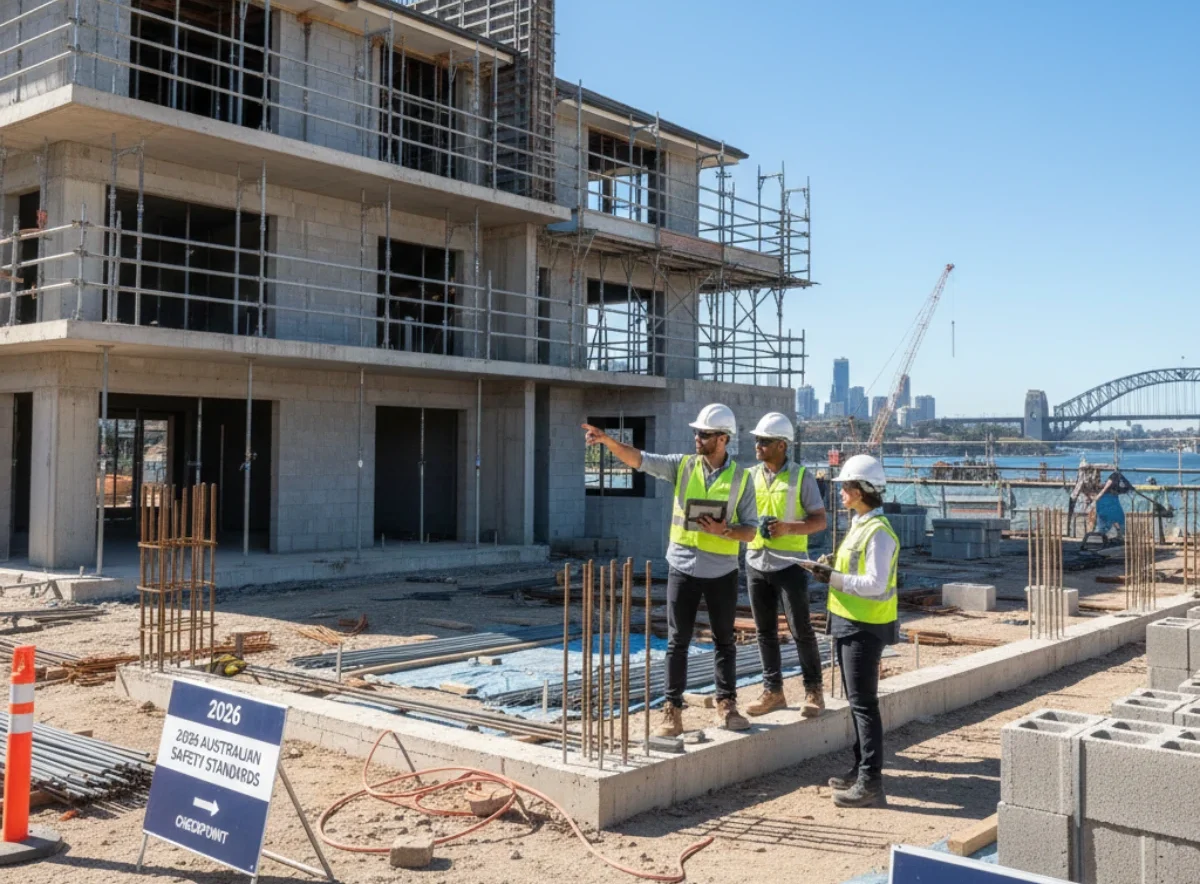
2.3 Concrete / Masonry / Heavy Mass Systems
What is it?
Structures using concrete (reinforced with steel rebar), masonry (brick, block), precast panels, or heavy mass materials. These systems are generally heavier, more robust and require more time to build. (jims.net)
Strengths:
- Durability, fire resistance, termite resistance.
- Excellent for thermal mass — helping in climates with wide temperature swings. (respirabuilt.com.au)
- Suitable for high rises, commercial, or heritage styles.
Typical Uses:
- Apartment towers, high-rise buildings, commercial offices.
- Premium residential homes seeking longevity or higher thermal mass.
- Bushfire prone zones (if built with appropriate systems).
Cost Considerations / Cost Drivers:
- Heavier foundation, more materials, more labour → higher upfront cost.
- Longer build time.
- Maintenance of complex systems (e.g., concrete cracks, masonry repointing).
- Engineering and compliance costs (for multi-storey).
For example: one source says “a concrete framed building will probably require specialist builders and contractors… building a concrete structure will usually cost more than conventional structures.” (jims.net)
When to use it:
When you’re aiming for longevity, large scale, premium finishes, or where structural demands are high.
2.4 Hybrid & Emerging Systems (Steel + Timber + Mass Mix)
What is it?
Combining two or more structural systems: e.g., steel frame + timber floors, or mass timber (CLT – cross laminated timber) + steel. Also includes modular prefabricated systems, insulated concrete forms (ICF), rammed earth, etc. (yourhome.gov.au)
Strengths:
- Flexibility to optimise for cost, performance, sustainability.
- Often faster to build (prefab elements).
- Can deliver architectural uniqueness (e.g., fully mass timber buildings now emerging in Australia).
Typical Uses:
- Innovative residential builds, large renovations, commercial buildings aiming for sustainability credentials.
- Sites with restrictions (e.g., near heritage, bushfire zone) where hybrid gives advantages.
Cost Considerations / Cost Drivers:
- Novel systems may cost more upfront (for engineering, materials).
- Supply-chain and builder experience can add cost or delay.
- Often payback comes via lower energy, lower maintenance — but requires long-term view.
When to use it:
If you’re building something bespoke, aiming for high sustainability (net zero), or want to future-proof the structure.
3. Cost Comparison Snapshot
Here’s a rough comparison of how the structure type influences cost (very general ranges…). Note: actual costs depend heavily on site, finishes, labour, materials, region, design complexity.
| Structure Type | Typical Cost Factor* | Suitability |
|---|---|---|
| Timber-framed (standard) | Lower cost | Standard homes, suburbia |
| Steel-framed (residential) | Medium to higher cost | Open plan, large spans |
| Concrete/Masonry | High cost | Premium, large scale, commercial |
| Hybrid / Mass Timber / ICF | Variable (often high) | Bespoke, sustainable, future-proof |
* “Cost factor” here means relative to each other, not absolute figures.
For example: one source points out that steel structures are more expensive than timber in many Australian cases. (hipages)
Pro Tip: Always ask your builder for a “structure breakdown” cost. Often the structure (frame + footings) will account for 25-35% of your total build cost — so the choice matters.
4. Quick Guide: Choosing the Right Structure for Your Project
Intro
You’re planning a home/extension in an Australian suburb. You need to choose a structural system — but you’re not sure which to pick. Let’s simplify.
Common Challenges
- “I don’t know whether a timber frame will suffice or I need steel.”
- “Budget is tight — can I afford concrete mass construction?”
- “We want an eco-friendly home but don’t want to blow the budget.”
How to Solve It
1. Define the build scale & design ambition
If you’re building single-storey, standard suburban house → timber likely sufficient.
If you want big spans, open plan, high ceilings → consider steel or hybrid.
2. Assess site constraints and climate
Bushfire zone, termite risk, coastal corrosion — these factors push up cost of system and materials (e.g., treated timber vs steel).
Choose materials accordingly.
3. Budget vs long-term payoff
If budget is tight now, timber-frame is cost-effective.
If you’re building for longevity, large scale, or resale advantage, maybe spend more on steel or concrete.
4. Consult builder/engineer early
Get structural advice and cost comparison. A builder familiar with one system only may push that — get quotes for two or three systems.
Why It Works
By clarifying your scope, site conditions, and budget, you reduce the “I’ll just pick whatever” risk, and choose a structure that aligns with your project. Less regret, fewer change-orders, fewer surprises.
5. Interactive Quiz: Which Structure Suits You?
1. What’s your build type?
A. Single-storey suburban home
B. Two-storey or large open plan home
C. Apartment or commercial / high-rise
2. Your priority?
A. Keep cost low / simple build
B. Design flexibility + open space
C. Durability / longevity / premium build
3. Site conditions likely include?
A. Typical suburban lot
B. Coastal / bushfire risk / termite prone
C. Urban site / multi-storey constraints
Results:
- Mostly A’s → Go timber-framed.
- Mostly B’s → Consider steel-framed or hybrid.
- Mostly C’s → Concrete/masonry or hybrid with mass timber.
6. Mistakes to Avoid
- Choosing structure solely based on what you “see nearby” rather than what suits your site.
- Under-estimating site or climate risk (eg termite, corrosion, bushfire) — these can add significant cost later.
- Ignoring long-term costs: maintenance, energy efficiency, repairs.
- Not getting multiple quotes. A structural system may seem cheaper until you factor extras.
- Ignoring builder/contractor experience. Exotic systems (mass timber, hybrid) may be innovative but cost more and need experienced teams.
7. FAQs
Q1: What’s the cheapest structural system for a house in Australia?
Typically, a standard timber-framed system on a slab is the most cost-effective route for a suburban home. While cost varies by region and design, simpler 4×2 homes with timber framing often come in lower than steel or heavy mass systems. (The Brazilian Engineer in Australia)
Q2: Is steel framing worth the extra cost?
Yes — if your design demands it (large spans, multi-storey, open plan), or if you need durability/performance. Steel offers higher strength and flexibility but does come at higher cost. (wasteel.com.au)
Q3: Do concrete structures cost more to maintain?
Heavy mass systems can have higher initial build cost, but often lower maintenance overhead (e.g., termite/fire resistance). However, repair of concrete/masonry (e.g., cracking, repointing) may require specialist trades.
Q4: What about sustainability / green building?
Hybrid systems, mass timber (CLT), insulated concrete forms (ICF) and other eco-systems are gaining traction in Australia. They might cost more upfront but can deliver lower running costs and better environmental credentials. (yourhome.gov.au)
Q5: Should I always build to the most “premium” structure?
Not necessarily. The “right” structure matches your budget, site, design ambition and long-term goals. Building a simple structure perfectly to your needs is better than choosing the most expensive structure and ending up with budget blowouts.
Conclusion
Understanding the types of building structures Australia commonly uses gives you power: to budget accurately, set realistic design expectations, avoid surprises, and choose a system that fits both your site and your ambition. Whether you go timber, steel, concrete or a hybrid, picking the right structure sets the foundation (literally) for how your project will perform—today and decades from now.
So take a moment, quiz yourself, discuss with your builder/engineer, compare quotes, and pick a structure that aligns with your vision. Your future self (and wallet) will thank you.
Disclaimer
This article provides general information on structural systems and does not constitute design, engineering or construction advice tailored to your specific project. Always consult a licensed structural engineer, architect or builder for your individual requirements. Building costs and suitability vary by site, region and regulatory conditions.