
Smart Money · Household planning
An annual bill can have a place in every payday.
To build a sinking fund for annual expenses, list the bills you expect, record when each one is due, and divide the amount still needed by the paydays remaining before payment. Put that contribution aside regularly, then use the saved money when the bill arrives.
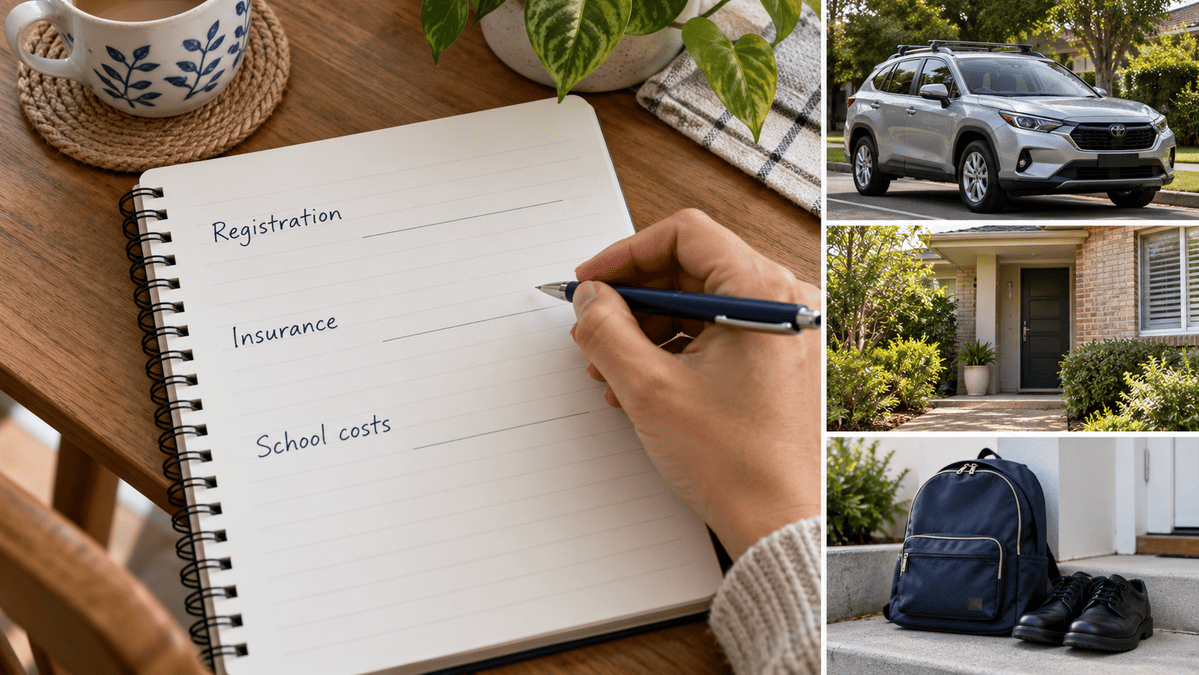
A sinking fund is simply money reserved for a particular future expense. It can cover car registration, insurance renewals, school costs or other spending that falls outside your usual weekly budget. The useful part is the link between the money, the purpose and the deadline.
Quick overview: Start with real bills, calculate the first deadline carefully, and keep a running record of what each part of the balance is for. Once the first payment is covered, reset the contribution for the next cycle.
First, separate known costs from genuine surprises
Car registration is predictable even when you cannot remember the renewal date. A scheduled service is also something you can plan for, although the final price may change. An urgent, unexpected repair is a different problem.
This distinction helps you decide where a cost belongs. A sinking fund covers an expense you can reasonably anticipate. An emergency fund provides money for urgent or unexpected costs; ASIC’s Moneysmart explains that separate safety-net role.
You can keep the money in the same bank account if that suits your setup, but give the purposes separate balances in your records. Otherwise, an account that looks like a healthy emergency reserve may already be committed to insurance and rates.
There is also a difference between a mandatory bill and an optional goal. A holiday, birthday budget or new appliance can have its own sinking fund, but those targets need to fit around essential expenses and required debt repayments. Naming a goal does not make it affordable.
Find the expenses your monthly budget misses
Look through the past 12 months of bank transactions, renewal emails and invoices. A few months of statements can miss a once-a-year payment. For every likely expense, record the expected amount, the next payment date and anything already saved for it.
Moneysmart’s budgeting guide specifically includes annual bills and irregular costs, and recommends checking bank statements for the amount and timing of expenses. Use that review to build your list rather than relying on memory.
Depending on your household, check:
- Transport: registration, insurance, scheduled servicing, roadside assistance and foreseeable tyre replacement.
- Home: council rates where you are responsible for them, home or contents insurance, and planned maintenance.
- Family and health: school uniforms, stationery, activity fees, scheduled dental care and routine pet costs.
- Renewals and choices: annual memberships, software subscriptions, gifts and celebrations.
Check what each figure includes. For vehicle costs, do not count an insurance component twice if it is already included in a notice or a separate policy entry. For a subscription you have cancelled, remove the future renewal rather than saving for last year’s spending automatically.
Not everything needs to be annual. A quarterly bill or a replacement expected in two years can use the same method: a target amount and the paydays before it is needed. If a monthly insurance payment is already included in your everyday budget, do not also reserve the full annual premium unless you are deliberately preparing to change payment frequency.

For costs without a fixed invoice, write down the assumption behind the target. A schoolwear estimate might cover two shirts, replacement shoes and a jumper. If those needs change, you can adjust the figure instead of treating the original estimate as a rule.
How to build a sinking fund for annual expenses: do the payday calculation
There are two useful calculations. One tells you the ongoing cost of a full year. The other tells you what you must save to meet the next actual deadline. Use the deadline calculation first if you are starting partway through a billing cycle.
Work out the ongoing annual contribution
The table below is a hypothetical household plan in Australian dollars. These are demonstration amounts, not average Australian prices, quotes or recommended spending levels. Your responsibilities and costs may be quite different.
| Expense | Annual target |
|---|---|
| Vehicle registration | $900 |
| Car insurance | $1,200 |
| Scheduled car servicing | $600 |
| School clothing and supplies | $500 |
| Annual subscriptions | $200 |
| Council rates | $1,800 |
| Total | $5,200 |
Divide that total by your payment frequency to estimate the ongoing contribution:
$100each week
over 52 contributions
$200each fortnight
over 26 contributions
$433.34each month
rounded up over 12 contributions
Fortnightly and twice-monthly pay are different. A typical fortnightly planning year uses 26 contributions, while twice-monthly pay uses 24. For a real bill, count the actual pay dates available before its payment deadline; calendar timing can change that number.
Calculate the first bill using the time you actually have
Contribution needed each payday
(Target cost − money already allocated) ÷ paydays before payment
Suppose your registration target is $900, you already have $300 reserved for it, and six paydays remain before you need to pay. The remaining $600 divided by six is $100 each payday.
Dividing $900 by 26 would give about $34.62 a fortnight across a full cycle. That figure is useful after the renewal has been paid, but it will not close the current $600 gap in six paydays. Starting late usually means a temporary catch-up contribution, a top-up from money genuinely available, or a revised payment arrangement.
If the amount already reserved meets the target, the catch-up contribution is zero. If there are no paydays before payment, the formula cannot create time: you need to address the immediate bill separately. Exclude a payday that falls after the money must leave your account, and allow for transfer or payment-processing time.
Why a correct annual total can still leave you short
An annual average spreads the cost evenly. Bills do not necessarily arrive evenly. In the example above, starting with no money and saving $433.34 in the first month would not cover a $900 bill due that month: the gap would be $466.66.
Check the running balance at each deadline: opening savings plus deposits received, minus bills paid. If it falls below zero, fix that date’s shortfall rather than assuming the annual average is enough.
Choose an account setup you can keep accurate
A sinking fund is a way of organising money, not a special financial product. You can use separate savings accounts, a bank’s savings buckets, or one account with a simple category ledger.
Separate pots make each purpose visible. A pooled account keeps the banking setup simpler, but needs an accurate record. If the account contains $2,000 and $1,500 is allocated to upcoming insurance, you have $500 left for other categories, not $2,000 available for any bill.
For money earmarked for near-term bills, prioritise access when needed and the ability to preserve the amount reserved. An investment whose value can fall introduces a risk that the money will be worth less when payment is due.
When comparing savings accounts, look at fees, access, linked-account requirements and the conditions attached to interest. Moneysmart’s savings account guide explains these features. A bonus rate with conditions that clash with regular bill withdrawals may be less useful for this purpose than its headline suggests.
Keep the initial ledger small. One row per category is enough: target, due date, opening allocation, contributions, withdrawals and current balance. The category balances should add up to the amount in the account that belongs to the fund. Reconcile them after payments so the same dollars are never allocated twice.
Fit the transfer around the rest of your budget
Put the contribution into your budget before deciding how much is available for flexible spending. If the plan says save $200 a fortnight but your budget has only $80 available after essentials and required repayments, the plan has a $120 problem. An automatic transfer will not resolve it.
Review optional renewals, reduce discretionary targets, check estimates and consider whether payment timing can change. Preserve the distinction between reducing the cost and spreading it out: instalments can help cash flow, but compare the total payable, fees and terms before choosing them.
Once the amount is workable, schedule the transfer after income reaches the account, with enough room for other payments. Moneysmart’s budgeting guidance includes payday transfers as a way to automate a plan. Check the first few transfers rather than assuming the setup is correct.
If your income changes from week to week
A fixed transfer based on a strong week may be difficult to maintain during a quiet one. One approach is to set an affordable base contribution from a conservative income estimate, then allocate an agreed share of extra income to the closest essential deadlines.
For example, if a category needs $80 a fortnight but your dependable base is $50, record the $30 gap. Higher-income weeks must make up that gap before the deadline, or the target remains underfunded. A percentage of income alone does not guarantee that a fixed bill will be covered.
Keep reviewing the next due date as well as the annual target. Moneysmart has further guidance for managing a casual income if your hours or earnings vary. For self-employed households, distinguish money available for household spending from business costs and tax commitments before allocating it.
If you are already behind on essential bills
Start with the immediate payment problem. Contact the relevant provider early and ask what options apply to your situation. Moneysmart’s guide to difficulty paying bills outlines possible payment assistance and free financial counselling. A sinking fund can help with future cycles once the current obligations and available income have a workable plan.
Pay the bill, then reset the fund
Using the money for its intended bill is the point of the fund. When the balance drops after a renewal, record the withdrawal, check the actual cost and calculate the next contribution. You do not need to keep the account looking permanently full.
If the bill is higher than expected, calculate the shortfall and update the future target using the new information. If it is lower, you can leave the surplus assigned to that category, lower the next cycle’s contributions or deliberately reallocate it. Write down that decision.
A rollover needs context. Money left in a scheduled maintenance category may still be needed for work due later. Money saved for a cancelled subscription can be reassigned once you confirm there is no further charge. Do not sweep every leftover dollar out merely because a calendar year has ended.
Should you add a buffer to every annual bill?
A buffer can be useful for an estimate or a renewal that may change, but there is no universal percentage. Use a current quote or notice where possible. For an uncertain category, record a reasonable additional amount and why you chose it.
Keep that allowance distinct from emergency savings. Increasing every category heavily can make the plan unaffordable without addressing the most likely shortfall. Review estimates when better information arrives.
A short monthly check is usually more useful than repeatedly redesigning the system. Reconcile the balance, look ahead to the next few deadlines, confirm contributions are arriving and update costs that have changed. After a major income or household change, review sooner.
Set up one fund before your next payday
You do not need to organise every future expense at once. Choose one unavoidable bill and make its amount, deadline and contribution clear. Then expand the same record to the next category.
The next useful step is concrete: take the nearest annual bill, do the deadline calculation, and reserve the first affordable contribution. Build the wider system from there.
This article provides general budgeting information, not personal financial advice. Examples are illustrative and should be adjusted to your circumstances.