
Dealing with a death in a home or other property can involve far more than organising personal belongings and paperwork. In some circumstances, the property may also need specialist cleaning because biological contamination, bodily fluids, odours or other potentially hazardous material may remain.
Knowing when to arrange After Death & Forensic Cleaning Services can help families, executors, landlords and property managers avoid unnecessary exposure and make the next steps easier to manage.
This article focuses specifically on when specialist cleaning may be appropriate, rather than providing a general overview of deceased estate clearance or ordinary house cleaning.
At a Glance
You may need After Death & Forensic Cleaning Services when:
- A person has passed away and was not discovered immediately.
- Blood, bodily fluids or biological material are present.
- There is a persistent odour associated with decomposition.
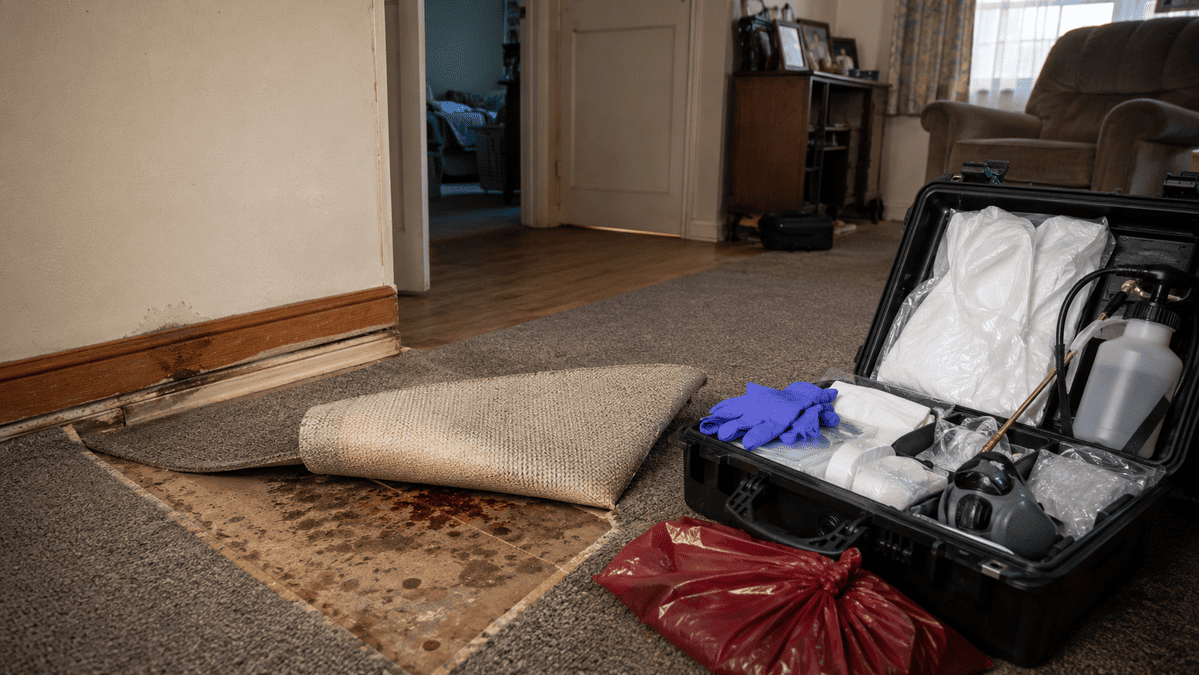
- Furniture, flooring or other porous materials have been contaminated.
- Emergency services have attended and the property still requires cleaning.
- A property needs to be made safer before family members, tradespeople or other occupants return.
- General cleaning methods would not adequately address contamination.
The main distinction is simple: ordinary dirt usually needs ordinary cleaning; biological contamination may require specialist procedures.
Want to understand when professional intervention becomes appropriate? Keep reading.
When Is After Death Cleaning Usually Necessary?
Not every death inside a property requires forensic cleaning.
For example, when someone passes away in a controlled environment and there has been no contamination of the surrounding area, specialist cleaning may not be necessary.
However, certain circumstances create very different conditions.
1. When a Death Has Gone Undiscovered
An unattended or undiscovered death can create contamination that spreads beyond the immediate location.
As time passes, biological material may affect:
- mattresses and bedding
- carpets and underlay
- timber or laminate flooring
- furniture
- walls and skirting boards
- subfloor areas
- surrounding personal belongings
Odour can also penetrate porous materials.
In these situations, simply opening the windows and reaching for household disinfectant is unlikely to address the underlying problem.
The longer contamination remains, the more important it becomes to assess how far it has travelled.
2. When Blood or Bodily Fluids Are Present
Visible biological contamination is one of the clearest indicators that specialist cleaning should be considered.
Blood and bodily fluids can potentially contain pathogens, and cleaning them safely involves more than wiping the visible surface.
The affected area may need to be:
- contained
- assessed
- cleaned
- disinfected
- treated for residual contamination
- checked for affected porous materials
Some contaminated materials may also need removal rather than cleaning.
Did You Know?
A surface can look clean while contamination remains in cracks, joins, carpet backing or porous materials underneath it.
That is one reason visual appearance alone should not determine whether an area is safe.
3. When Strong Odours Remain in the Property
Persistent odour after an unattended death is not simply an air-freshener problem.
Decomposition-related odours can be absorbed into materials throughout the affected area. Depending on the circumstances, these may include flooring, furniture, curtains, plasterboard and other porous surfaces.
Sprays and fragrances may temporarily disguise the smell, but they do not necessarily remove the source.
And while a heroic amount of lemon-scented cleaner might win the battle against yesterday’s cooking, this is one situation where household cleaning products have definite limits.
Specialist cleaners generally work by identifying and treating the contamination source rather than simply masking the odour.
4. When You Are Unsure What Has Been Contaminated
Sometimes the biggest problem is not what can be seen.
It is what cannot.
A family member entering the property might notice staining in one area but have no way of knowing whether liquids have moved:
- beneath carpet
- into underlay
- between floorboards
- underneath furniture
- behind skirting
- into adjoining materials
Rather than disturbing the area unnecessarily, it can be safer to arrange an assessment.
Practical rule: If you cannot confidently identify the extent of biological contamination, avoid treating it like an ordinary cleaning job.
5. After Police or Emergency Services Have Released the Property
Police, paramedics and other emergency personnel have specific responsibilities when attending a death.
Cleaning the property afterwards is generally a separate task.
Once the relevant authorities have finished their work and the property has been formally released to the appropriate person, arrangements can usually begin for cleaning and restoration.
Families sometimes assume that emergency services will also organise complete cleaning. That may lead to confusion at an already difficult time.
Before arranging After Death & Forensic Cleaning Services, make sure you have authority to access the property and that any required investigation has concluded.
Quick Guide: You Enter a Property and Discover Contamination
Imagine you are an executor, relative or property manager who has recently been given access to a home following a death.
You notice a strong odour and staining around one area but are uncertain how extensive the contamination is.
Common Questions
- Should you start cleaning immediately?
- Can contaminated carpet simply be shampooed?
- Is it safe to move furniture or personal belongings?
Rather than beginning with household cleaning products, a more controlled approach is usually preferable.
How to Handle It
Limit access
Avoid unnecessary movement through the affected area, particularly if contamination is visible.
Do not disturb affected materials
Moving carpets, mattresses or furniture may expose additional contamination.
Arrange an assessment
A specialist cleaner can determine which surfaces may be cleaned and which materials may require removal.
Separate important belongings carefully
Documents, photographs and valuables may sometimes be recoverable, but contaminated items should be assessed before being handled extensively.
Why This Approach Works
Starting with an assessment reduces guesswork. It also helps define the actual cleaning scope before people begin moving through or disturbing the property.
If the situation looks beyond normal household cleaning, arranging professional advice early can simplify the next steps.
What About Deceased Estate Cleaning?
After death cleaning and deceased estate cleaning can overlap, but they are not always the same thing.
A deceased estate clean may involve:
- sorting household items
- removing unwanted possessions
- general cleaning
- preparing a property for sale
- clearing cupboards and storage areas
Forensic cleaning focuses on biological contamination and potentially hazardous conditions.
A property may therefore require forensic cleaning first, followed by general deceased estate cleaning later.
Keeping these services distinct can also help avoid confusion when requesting quotes.
Who Might Need to Arrange the Service?
Depending on the situation, the person organising cleaning might be:
- a family member
- an executor
- a property owner
- a landlord
- a real estate or property manager
- an aged-care representative
- another authorised person managing the premises
Whoever makes the arrangements should be able to explain what is known about the property and confirm that access is permitted.
Quick Self-Check: Does the Property Need Specialist Cleaning?
Answer yes or no to the following:
1. Is there visible blood or biological material?
2. Was the person undiscovered for a period of time?
3. Is there a persistent decomposition-related odour?
4. Could contamination have reached carpets, flooring or furniture?
5. Are you uncertain whether it is safe to clean the area yourself?
Your Result
0 yes answers:
Specialist forensic cleaning may not be necessary, although circumstances should still be assessed individually.
1–2 yes answers:
It may be worth speaking with a specialist cleaning provider before disturbing the area.
3 or more yes answers:
A professional assessment is strongly worth considering before general cleaning begins.
This quiz is only a practical guide and not a formal safety assessment.
What Should You Tell the Cleaning Company?
Providing clear information can make the initial assessment easier.
Useful details include:
- property type
- rooms affected
- whether the death was unattended
- approximate condition of the property
- visible contamination
- noticeable odour
- flooring type
- access arrangements
- whether authorities have released the property
- whether particular belongings must be retained
Photos may sometimes help a cleaning company understand the situation before attending, provided they can be taken without exposing anyone unnecessarily.
FAQs About After Death & Forensic Cleaning Services
Can family members clean the area themselves?
Minor ordinary cleaning is very different from handling biological contamination.
Where blood, bodily fluids, decomposition or potentially hazardous material are present, professional assessment may be preferable because specialist cleaning can involve protective equipment, appropriate disinfectants, contamination control and disposal procedures.
How quickly should forensic cleaning be arranged?
Once the property has been released and access is authorised, it is generally sensible to arrange an assessment promptly.
Delays may allow odours or contamination to affect additional porous materials, although every property is different.
Does everything in the room have to be thrown away?
Not necessarily.
Items are usually considered according to factors such as:
- what they are made from
- whether they are porous
- their proximity to contamination
- whether they can be cleaned effectively
Some possessions may be recoverable while others may need to be removed.
Is forensic cleaning the same as normal deep cleaning?
No.
Deep cleaning usually deals with built-up dirt, grease, dust and general hygiene.
After Death & Forensic Cleaning Services deal with circumstances where biological contamination or related hazards may be present, requiring a different level of assessment and cleaning.
Can the property be cleaned before it is sold?
Yes, once any required investigation has concluded and the authorised person has access.
In more complex situations, forensic cleaning may be completed first, followed by deceased estate clearing, repairs and normal pre-sale cleaning.
Conclusion
Knowing when to arrange After Death & Forensic Cleaning Services can prevent a difficult situation from becoming more complicated. Specialist assistance is particularly worth considering after an unattended death, where biological contamination is visible, persistent odours remain or the extent of contamination is uncertain.
The key is not to judge the situation purely by appearance. Contamination may extend beneath flooring, into furniture or into other porous materials.
Once the property has been released and access is authorised, an early professional assessment can help determine what needs cleaning, what may need removal and what can potentially be preserved.