
You have collected the keys to your new rental, and the property manager has sent through a condition report. Most rooms are marked clean, undamaged and working. But when you look around, you notice a scratch on the kitchen benchtop, marks on a bedroom wall and a bathroom exhaust fan that doesn’t seem to work.
Those details are worth recording before you settle in.
A rental property condition report documents the state of a home at the beginning of a tenancy. It provides a reference for comparing the property’s condition when the tenant moves out, particularly if questions arise about cleaning, damage or the rental bond.
Knowing how to read a rental property condition report helps tenants identify missing information, describe existing problems accurately and keep a useful record from the first day.
Quick Overview
- Check every entry: Don’t assume the property manager’s description is correct.
- Record existing defects: Include marks, stains, damage, cleanliness issues and appliances that aren’t working.
- Take dated photos: Keep clear images that match your written comments.
- Know your deadline: The time allowed to return a report varies between Australian states and territories.
- Keep your records: Save the completed report, photographs and correspondence for the entire tenancy.
What Does a Rental Property Condition Report Actually Show?
A condition report is a room-by-room record of the property’s condition when a tenancy begins.
Depending on the state or territory, the form may be called an entry condition report, ingoing inspection report or property condition report.
It generally covers:
- Walls, ceilings, doors, windows and floors
- Kitchens, bathrooms and laundry areas
- Fixtures, fittings and supplied appliances
- Cleanliness and existing damage
- Outdoor areas, garages and storage spaces
- Items supplied with the property, such as furniture or window coverings
The report may contain checkboxes, written descriptions, photographs and additional comments.
Its main purpose is to establish what was already present before the tenant moved in.
For example, if a bathroom tile was cracked at the start of the tenancy, an accurate report and supporting photograph can help establish that the crack was not new damage caused during the tenancy.
The report is evidence of the property’s condition, but it does not automatically determine who is responsible for every repair or guarantee the return of a rental bond.
How to Understand the Ratings and Checkboxes
Many condition reports use categories such as Clean, Undamaged and Working.
These describe different aspects of an item. One positive rating does not mean every aspect of the item is satisfactory.
Clean
This describes whether an area or item is reasonably clean at the time of inspection.
For example, a kitchen cupboard might be undamaged but contain grease or food residue.
If the report says the cupboard is clean, you can record the discrepancy.
Undamaged
This indicates whether an item has visible damage.
A window may be clean and open correctly but have a chip in the glass. The report should distinguish those conditions.
Normal age-related wear may also be worth documenting, even where it is not considered damage.
Working
This records whether a fixture, fitting or appliance operates.
An oven may look spotless but fail to heat properly. A garage door may appear undamaged but become stuck when operated.
If something cannot be safely tested, say so rather than assuming it works.
Important: Not every Australian jurisdiction uses the same form or terminology. Read the instructions on the actual report before interpreting its boxes or ratings.
Read the Report While Inspecting Each Room
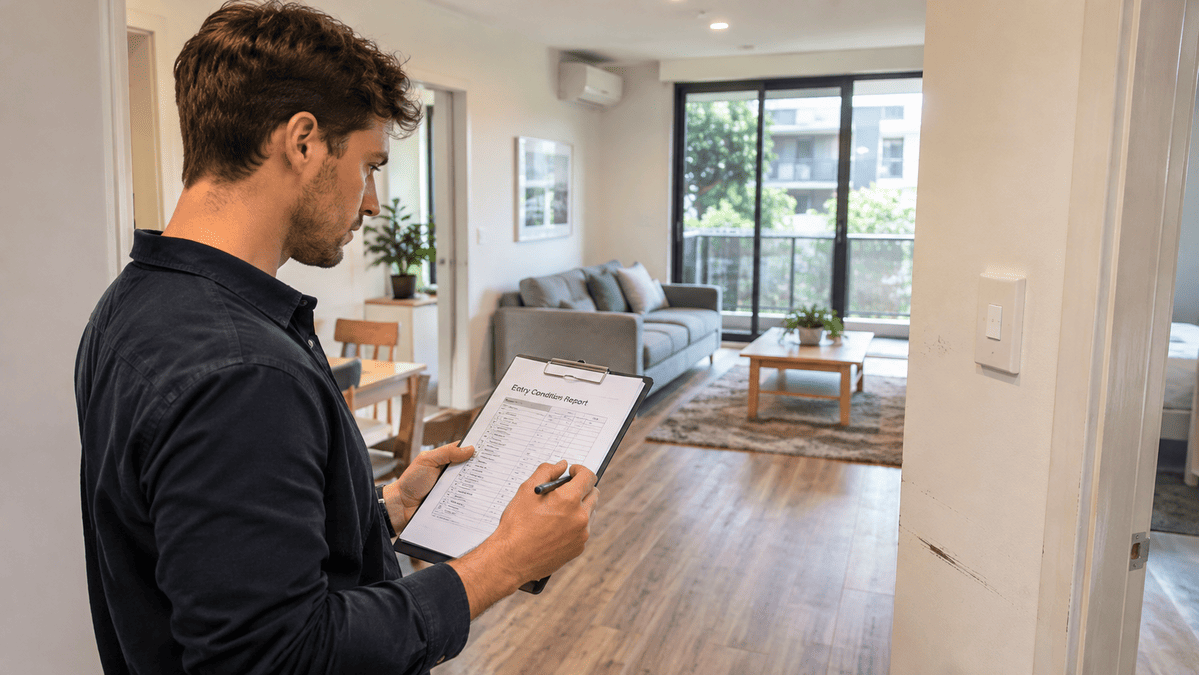
The easiest way to check a condition report is to walk through the property with the document open.
Rather than completing all the paperwork from memory afterwards, compare each description with what you can actually see.
Start with walls, ceilings and floors
Look for existing marks, stains, scratches, chips and cracks.
Pay particular attention to areas behind doors, around light switches and near windows.
On floors, note worn carpet, damaged tiles, scratches in timber or laminate and any unusual staining.
Be specific about the location of each issue.
“Marks on wall” is less useful than “Three dark scuff marks on the living room wall beside the balcony door.”
Check kitchens and bathrooms carefully
These areas contain several surfaces, fixtures and appliances that may need separate comments.
Inspect the condition of:
- Benchtops, cupboards and drawers
- Sinks, taps and visible pipework
- Cooktops, ovens and rangehoods
- Shower screens, tiles and grout
- Toilets, basins and mirrors
- Exhaust fans and supplied fittings
Check for obvious leaks, damaged seals, mould, staining or fittings that do not operate properly.
A bathroom can appear clean at first glance while still having an existing crack in the shower screen or a faulty extractor fan.
Don’t forget outside areas
Where included in the tenancy, inspect balconies, courtyards, gardens, fences, gates and garages.
Note damaged paving, broken fittings, existing rubbish or vegetation that needs attention.
Check the condition and operation of supplied equipment where it is safe to do so.
For properties with meters, record relevant starting readings where applicable. This can help clarify utility charges later.
How to Write Useful Comments on the Report
Comments should describe observable conditions rather than make assumptions about their cause.
For example, writing “Water stain on ceiling above shower” is more reliable than claiming a particular plumbing fault caused the stain without an inspection.
The following examples show how vague comments can be improved.
| Item | Vague comment | More useful description |
|---|---|---|
| Living room wall | Dirty | Two black scuff marks beside the entrance door |
| Kitchen benchtop | Damaged | Approximately 4 cm scratch beside the sink |
| Bedroom carpet | Worn | Flattened carpet near doorway and small brown stain beside wardrobe |
| Bathroom fan | Broken | Fan does not start when switched on during inspection |
| Balcony | Needs cleaning | Dust and dried leaves across floor and in sliding-door track |
These are illustrative examples, not findings from an actual property.
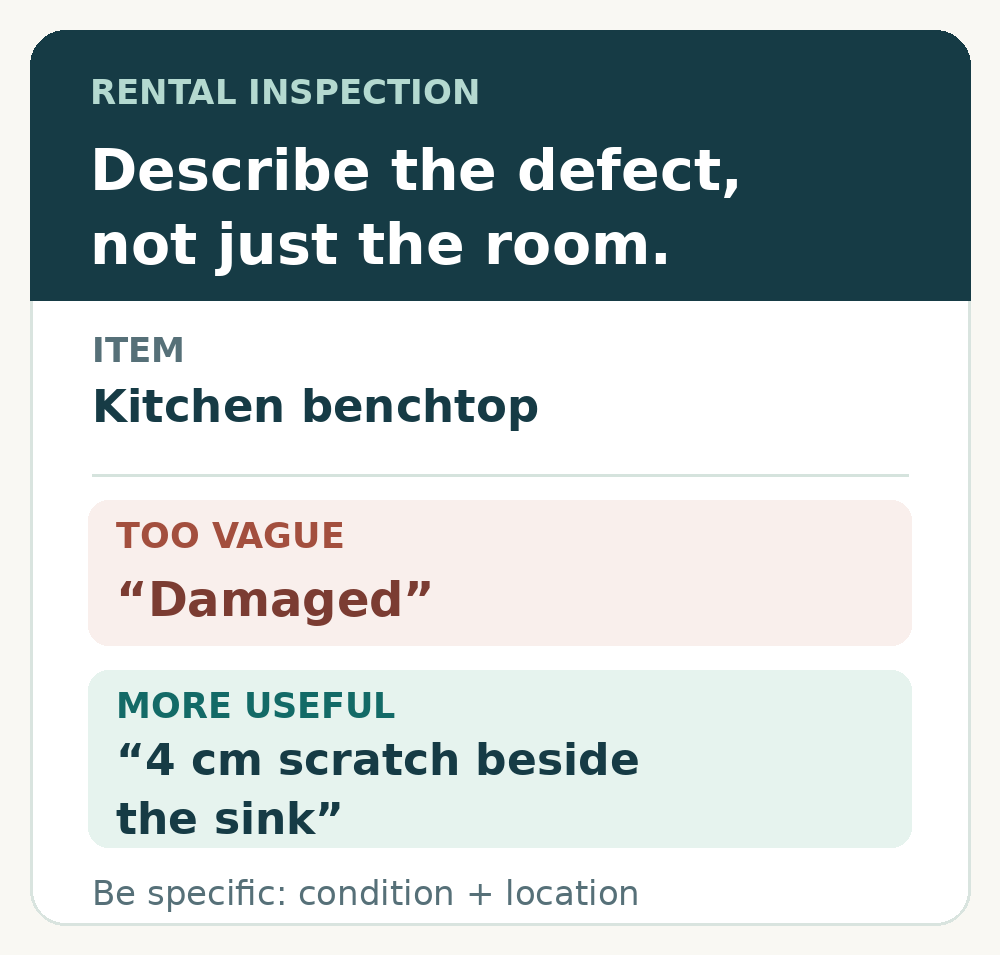
Where possible, use plain descriptions that identify the item, location and condition.
You do not need technical building terminology.
If there isn’t enough space on the form, check how to attach additional comments or pages. Make sure those additions are clearly associated with the correct report.
Why Photos Matter as Much as Written Comments
Photos make it easier to understand what a written description refers to.
A sentence saying there is a scratch on a kitchen benchtop may be helpful. A clear photograph showing the scratch and its location provides additional context.
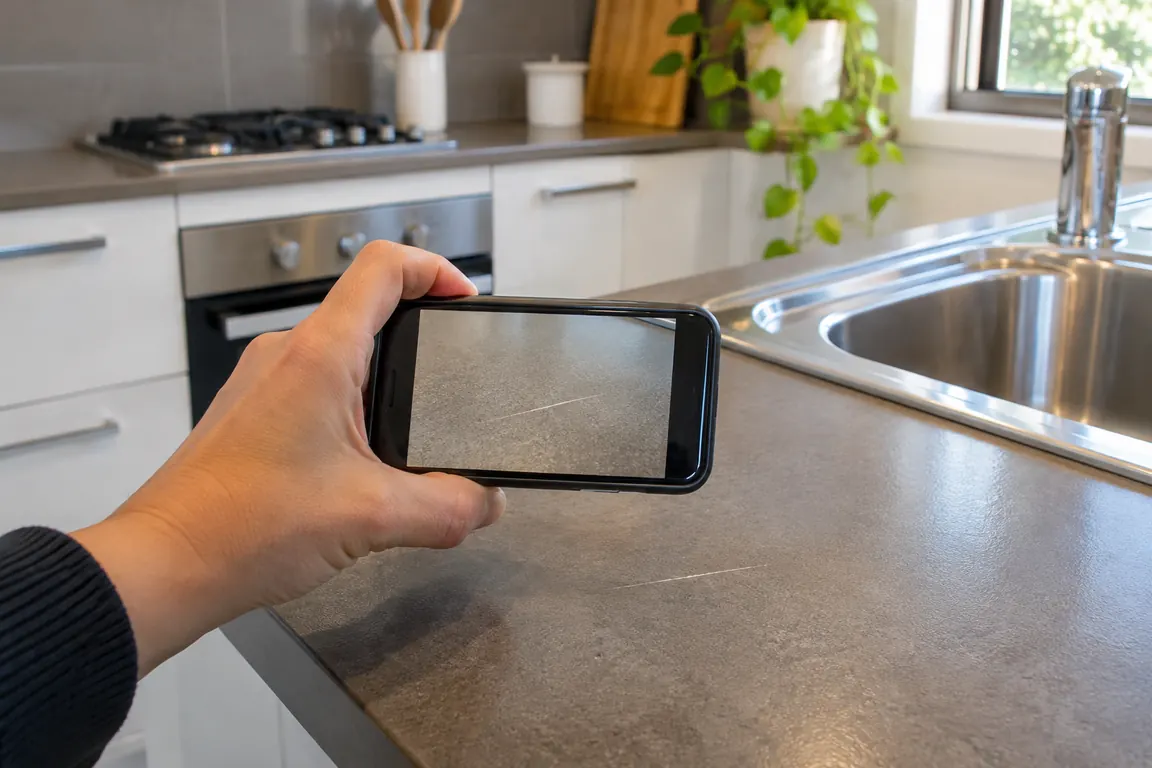
For each significant defect, consider taking:
- A wider photograph showing where the item is located.
- A closer photograph showing the actual mark, damage or problem.
- A dated record connecting the photograph to the beginning of the tenancy.
For something that doesn’t operate properly, a short video may also be useful if it safely demonstrates the issue.
Avoid heavily editing images or using filters that change the appearance of a defect.
Keep original photographs where possible, organise them by room and retain the date information. If the reporting system allows attachments, include the relevant images and save a copy of what you submitted.
Official guidance from NSW Fair Trading and Consumer Affairs Victoria recommends photographs to support condition reports.
How Long Do You Have to Return the Condition Report?
Australian rental laws are not identical across states and territories.
The deadline to return an entry condition report depends on where the property is located.
For example:
| State | Return deadline |
|---|---|
| New South Wales | Within 7 days of taking possession |
| Victoria | Within 5 business days of moving in |
| Queensland | Within 7 days after the later of occupying the premises or receiving the report |
| Tasmania | Within 2 days of receiving the report, where the owner provides one under the bond requirements |
These examples are based on published guidance from the relevant state authorities. They do not cover every jurisdiction or every type of rental arrangement.
Check the current rules for your location, especially if you rent a room, live in specialised accommodation or have a different type of tenancy agreement.
If you notice a mistake, don’t leave it until the last day to investigate. Give yourself time to inspect the property, photograph defects and return the completed document.
What If You Disagree With the Property Manager’s Report?
You do not have to silently accept every description in a report.
Suppose the property manager has marked the living room walls as undamaged, but you notice two existing dents.
Record the disagreement in the relevant section and add photographs.
You might write:
“Disagree with ‘undamaged’. Two small dents on the wall beside the television outlet. Photos attached.”
Keep the wording factual and polite.
If the property manager disagrees with your observations, communicate in writing and retain the correspondence.
You should still follow the applicable requirements for completing, signing and returning the report within the required period. Marking a disagreement on the document is different from leaving it uncompleted.
Where a disagreement cannot be resolved, the relevant state or territory tenancy authority can explain the available dispute-resolution process.
What If the Property Has a Problem That Needs Repair?
Recording a defect and requesting a repair are related, but they serve different purposes.
The condition report establishes that an issue was present at the beginning of the tenancy.
A repair request asks the rental provider or property manager to take action.
For example, if you discover that the bathroom exhaust fan isn’t working, record that condition in the report and separately notify the property manager that a repair is required.
For urgent or potentially dangerous problems, such as exposed wiring, serious water leaks or significant security issues, follow the applicable urgent-repair procedure promptly.
Do not delay reporting a safety concern simply because you are still completing the report.
Likewise, don’t attempt electrical, gas or other hazardous repairs yourself.
The applicable repair obligations depend on tenancy legislation and the circumstances of the fault.
Understanding Fair Wear and Tear Versus Damage
A condition report becomes particularly useful when the tenancy ends.
The exit inspection can be compared with the original entry report to identify what has changed.
However, a change in condition does not automatically mean the tenant must pay for it.
Australian tenancy laws generally distinguish between fair wear and tear and damage for which a tenant may be responsible.
Fair wear and tear refers to deterioration through ordinary use, ageing or environmental exposure.
Examples may include carpet becoming worn along frequently used walkways or paint fading in sunlight.
Damage may involve something broken, scratched or otherwise affected through careless or improper use.
Examples can include a burn mark on a benchtop or a broken window caused by careless handling.
The cause, age of the item, extent of damage and relevant tenancy rules all matter.
A tenant is not automatically responsible for replacing an entire item simply because it shows some deterioration.
For practical examples, see the Queensland Residential Tenancies Authority’s fair wear and tear guide.
Mistakes That Can Make a Condition Report Less Useful
Even a completed condition report may leave important questions unanswered if it contains vague or missing information.
Common problems include:
- Ticking every box without checking: This can leave inaccurate descriptions unchallenged.
- Ignoring small defects: Minor scratches and stains can become points of disagreement later.
- Taking only general room photos: Wide shots may not capture smaller marks or damaged fittings.
- Writing vague descriptions: Comments such as “bad condition” can be difficult to interpret.
- Forgetting outdoor areas: Balconies, garages and gardens may be part of the tenancy.
- Missing the return deadline: This can complicate disputes and may breach reporting requirements.
- Failing to keep a copy: Without the original record, comparing conditions at the end of the tenancy becomes harder.
Spending a little more time checking the property at the beginning can reduce uncertainty later.
What Happens When You Move Out?
At the end of the tenancy, an exit condition report or inspection records the property’s condition after occupation.
The original report provides the starting point for that comparison.
For example, if the entry report recorded an existing carpet stain, that evidence may help distinguish it from any new staining identified during the exit inspection.
The property manager or rental provider may also consider photographs, repair records, correspondence and other relevant evidence.
If a bond deduction is proposed, ask for an explanation and supporting evidence rather than relying only on a general description of damage or cleaning.
The procedure for disputing a deduction depends on the state or territory.
In some circumstances, a tenancy tribunal or another authorised decision-maker may need to resolve the disagreement.
A Final Check Before You Submit
Before returning the condition report, check that:
- You have inspected every listed room and relevant outdoor area.
- Incorrect descriptions have been corrected or clearly disputed.
- Existing damage, stains and cleanliness issues are documented.
- Supplied fixtures and appliances have been checked where safe.
- Your photographs correspond to the written comments.
- Repair concerns have been reported separately where necessary.
- You have completed the required signatures and submission steps.
- A complete copy of the report and attachments has been saved.
A rental property condition report should reflect the property as you found it, including its imperfections.
Read it carefully, add accurate observations and keep the supporting evidence organised. Those records can make discussions about maintenance, cleaning and the rental bond much clearer when the tenancy eventually ends.