
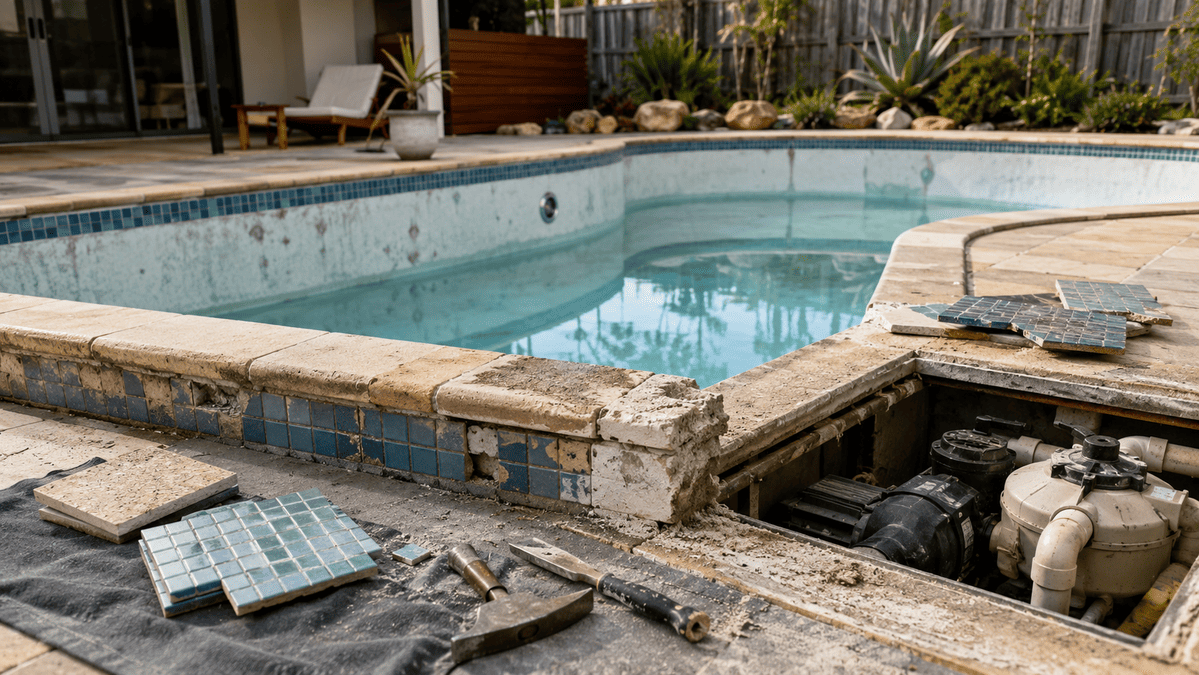
Renovating a swimming pool can sound like a major undertaking. Between resurfacing, replacing tiles, updating equipment, improving lighting and deciding whether that old water feature still deserves a place in your backyard, it is easy for a straightforward project to become surprisingly complicated.
The good news is that planning Pool Renovations without overcomplicating the project is entirely possible when you focus on priorities, understand the condition of your existing pool and make decisions in the right order.
This article explains how Australian homeowners can approach Pool Renovations in a practical way, from identifying what genuinely needs attention to setting a realistic budget and avoiding unnecessary extras. The goal is not to list every renovation service available, but to help you plan the project clearly before work begins.
At a Glance
A simpler approach to Pool Renovations usually means:
- Starting with the problems that actually need solving
- Separating essential repairs from cosmetic upgrades
- Setting a realistic budget early
- Choosing a clear style rather than mixing too many ideas
- Reviewing pool equipment while access is available
- Thinking about maintenance as well as appearance
- Confirming the project scope before construction begins
The best renovation is not necessarily the one with the longest list of upgrades. It is the one that solves the right problems and leaves you with a pool you will actually enjoy using.
Want to keep your renovation manageable from the beginning? Keep reading.
Start With Why You Are Renovating
Before looking at tile samples or saving photos of resort pools, ask one basic question:
What is wrong with the pool now?
The answer gives your renovation a clear direction.
Common reasons homeowners consider Pool Renovations include:
- Worn or stained pool surfaces
- Cracked or outdated tiles
- Ageing coping
- Leaks or recurring maintenance issues
- Old pool equipment
- Poor lighting
- An outdated appearance
- Difficult access around the pool
- A layout that no longer suits the household
Some pools mainly need cosmetic improvement. Others have functional problems that should take priority.
If you begin by identifying the actual issues, you are less likely to turn a manageable renovation into a complete backyard reconstruction simply because you saw an impressive infinity pool online.
Separate Needs From Nice-to-Haves
One of the easiest ways to control the scope of Pool Renovations is to divide your wish list into two categories.
Essential
These are issues affecting the pool’s condition, safety or operation, such as:
- Damaged surfaces
- Deteriorating tiles
- Faulty equipment
- Plumbing problems
- Unsafe coping
- Poor circulation
- Serious leakage concerns
Optional
These are improvements that may enhance the pool but are not necessarily required.
Examples might include:
- Decorative water features
- Colour-changing lighting
- New design finishes
- Additional seating areas
- Upgraded landscaping around the pool
There is nothing wrong with including optional upgrades. The important thing is knowing which features are genuinely important before the budget starts stretching.
Pro Tip: Create three columns before speaking with a contractor: “Must Fix”, “Would Like” and “Maybe Later”. This simple exercise can prevent surprisingly expensive spontaneous decisions.
Have the Existing Pool Properly Assessed
It is difficult to plan a renovation accurately if you do not understand the current condition of the pool.
Before finalising the scope, it may be necessary to assess areas such as:
- Interior pool surface
- Tiles and coping
- Plumbing
- Pumps
- Filters
- Heating systems
- Lighting
- Skimmers and returns
- Surrounding structures
Older pools can sometimes contain issues that are not obvious when filled with water.
Understanding the current condition can help distinguish between work that is purely aesthetic and work that may be necessary for the pool’s long-term performance.
A renovation plan should respond to the pool you actually have, not simply the pool you want it to become.
Set the Budget Before Choosing Every Finish
Pool renovation costs can vary considerably depending on the condition, size and scope of the project.
Rather than selecting everything first and then discovering the total cost later, decide on an approximate budget range early.
Your budget may need to cover:
- Surface preparation
- Resurfacing
- New tiles
- Coping
- Pool equipment
- Electrical work
- Plumbing repairs
- Lighting
- Labour
- Removal of old materials
- Surrounding landscaping or paving
It is also sensible to leave some room for unexpected issues, particularly when working with an older pool.
Otherwise, your renovation budget can behave a little like someone on holiday: perfectly disciplined for the first few days, then suddenly ordering everything on the menu.
Keep the Design Direction Simple
Design decisions can quickly become overwhelming.
There are endless combinations of pool interiors, tiles, coping materials, paving and lighting.
A simpler strategy is to choose one overall direction.
For example:
- Contemporary and minimal
- Coastal and relaxed
- Natural and earthy
- Classic and understated
Once the general style is established, individual selections become easier.
Instead of asking whether you like each material on its own, you can ask whether it fits the overall design.
Did You Know?
Many successful pool renovations use relatively restrained material palettes.
Repeating complementary finishes around the pool can often create a more cohesive result than combining several competing colours, textures and patterns.
Quick Guide: Updating a Tired Backyard Pool
Imagine an older residential swimming pool that still functions reasonably well but looks dated. The interior finish is worn, some tiles are discoloured and the pool lighting is poor.
The homeowners want a noticeable improvement without rebuilding everything.
Common Challenges
- Is the pool structurally usable but visually tired?
- Are there several small issues competing for the renovation budget?
- Is it difficult to decide which upgrades will make the biggest difference?
How to Solve It
Prioritise the visible surfaces
Refreshing the pool interior, tiles and coping can often create a significant visual change without redesigning the entire pool.
Check equipment while renovating
Review pumps, filters and lighting while work is underway so ageing components do not become the next major issue shortly after completion.
Limit the materials palette
Choose finishes that work together rather than introducing multiple design styles.
Leave unrelated landscaping for later
Unless surrounding areas need immediate attention, separating pool renovation from a complete backyard makeover can keep the project easier to manage.
Why It Works
This approach concentrates spending on the parts of the pool that are worn, outdated or inefficient.
The result can feel like a substantial transformation without creating a renovation scope far larger than necessary.
Think About Maintenance Before Adding Features
A renovation is a useful opportunity to consider how easy the pool will be to maintain afterwards.
Ask practical questions such as:
- Will new finishes be easy to keep clean?
- Is the filtration system still appropriate?
- Could circulation be improved?
- Is the lighting energy efficient?
- Are surrounding surfaces easy to maintain?
- Will new features create additional cleaning requirements?
An impressive design feature can become considerably less impressive when you discover it requires constant cleaning.
Low-maintenance decisions can add as much long-term value as cosmetic upgrades.
Confirm the Scope Before Work Begins
Once decisions have been made, make sure the renovation scope is clear.
Ideally, you should understand:
- What work is included
- Which materials have been selected
- What equipment will be replaced
- Whether surrounding areas are included
- How access will be managed
- The expected sequence of work
- What happens if additional problems are discovered
Clear expectations reduce the likelihood of misunderstandings or constant changes during construction.
Changes can sometimes be necessary, but repeated last-minute additions are one of the easiest ways to make Pool Renovations more expensive and complicated.
Quick Quiz: Is Your Pool Renovation Plan Getting Too Complicated?
Answer yes or no:
- Have you added upgrades that do not solve a specific problem?
- Are you considering several completely different design styles?
- Have you started selecting features without setting a budget?
- Are you renovating surrounding areas simply because “we might as well”?
- Do you keep adding new ideas every time you see another pool online?
Mostly no? Your project is probably staying focused.
Mostly yes? It may be worth reviewing the original reason for renovating before committing to more work.
Frequently Asked Questions
Should I renovate everything at once?
Not necessarily.
Some Pool Renovations benefit from completing related work together, especially when access or draining the pool is required. However, unrelated landscaping or outdoor upgrades may be able to wait.
A clearly staged project can sometimes be more practical than trying to complete every backyard improvement simultaneously.
Can I renovate an old pool without changing its shape?
Yes. Many renovations focus on refreshing the existing pool rather than completely altering its structure.
Depending on its condition, improvements may include:
- Resurfacing
- New tiles
- Updated coping
- New lighting
- Equipment upgrades
Keeping the existing pool shape can significantly simplify the project.
How long do Pool Renovations take?
Timeframes vary depending on the scope and condition of the pool.
A straightforward surface renovation will generally be simpler than a project involving structural changes, plumbing alterations and extensive surrounding works.
Weather, material availability and unexpected repair requirements can also influence timing.
When is the best time to start planning?
Planning before the pool becomes urgently unusable is usually beneficial.
It gives you more time to:
compare options, establish priorities, understand the scope and choose materials carefully.
For Australian homeowners, seasonal demand and local weather conditions may also influence when work can be scheduled.
Conclusion
Successful Pool Renovations do not need to involve changing every part of your swimming pool and backyard. A focused renovation starts by identifying what genuinely needs attention, separating essential repairs from optional upgrades and establishing a realistic budget before choosing finishes.
Keeping the design direction simple, reviewing existing equipment and considering future maintenance can also prevent unnecessary complexity.
Most importantly, make decisions based on how you actually use your pool. With a clear scope and practical priorities, Pool Renovations can refresh an ageing pool without turning a manageable improvement project into an endless backyard rebuild.