
Replacing or installing a garage door can make a noticeable difference to how a home looks, functions and feels day to day. It can also improve convenience, security and access, particularly if an older door has become unreliable, noisy or difficult to operate.
For Australian homeowners, understanding Garage Door Installation before the work begins can help avoid surprises and make it easier to choose the right door, opener and setup for the property.
This article focuses on what homeowners should know before installation, including preparation, door types, measurements, safety considerations and what typically happens on installation day. It is intended as a practical guide rather than a service page, so the emphasis is on helping you make informed decisions before booking the work.
At a Glance
Before arranging a Garage Door Installation, homeowners should consider:
- The size and layout of the garage opening
- Whether a roller, sectional or other door style suits the property
- Available headroom and side clearance
- Manual versus automatic operation
- Security and safety features
- Material, colour and design
- Local weather and environmental conditions
- Removal of the existing garage door
- Access for installers on the day
- Ongoing maintenance requirements
A professional installer can usually confirm measurements and suitability before the final installation takes place.
Want to understand the process before someone arrives with a van full of tracks, panels and mysterious-looking brackets? Keep reading.
Start With the Right Garage Door Type
One of the first decisions is choosing the type of garage door that suits your home.
Common options in Australia include:
Roller Doors
Roller doors roll vertically into a compact drum above the opening.
They are often suitable where homeowners want a relatively simple design and efficient use of space.
Sectional Garage Doors
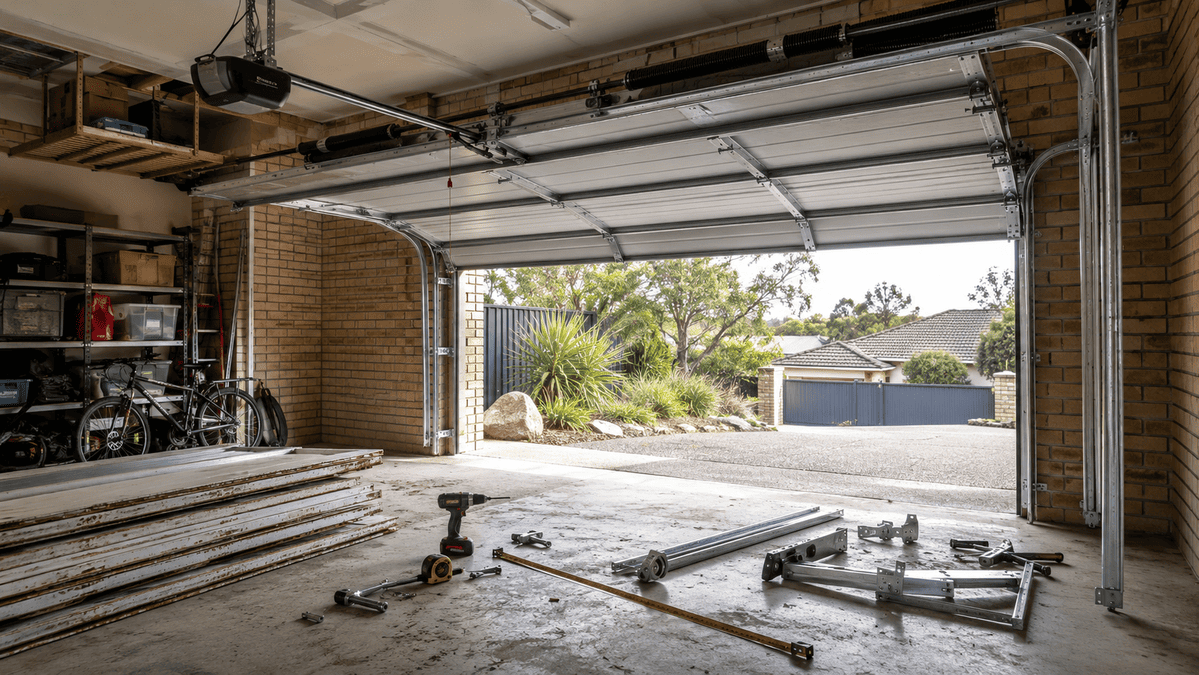
Sectional doors are made from several horizontal panels connected together. They open vertically before moving along tracks across the garage ceiling.
These doors are popular because they offer a broad range of finishes, colours and designs.
Tilt Doors
A tilt door generally operates as one large panel that pivots outward and upward.
They may suit certain architectural designs, although the outward movement means space in front of the garage needs to be considered.
The right choice depends on more than appearance. Ceiling height, driveway clearance, opening dimensions and how the garage is used can all influence which system is most practical.
Measurements Matter More Than You Might Think
Garage Door Installation is not a “close enough” measurement job.
The installer needs to consider the width and height of the opening as well as the surrounding space required for tracks, springs, brackets and the opener.
Important measurements may include:
- Opening width
- Opening height
- Headroom above the opening
- Side room on both sides
- Garage depth
- Ceiling clearance
Even relatively small differences can affect whether a particular door system can be fitted correctly.
Pro Tip: Avoid ordering a garage door based purely on measurements taken quickly with a household tape measure. Professional measuring can confirm whether structural features, uneven openings or limited clearances need to be considered.
Think About How You Actually Use the Garage
The best garage door is not necessarily the most expensive or elaborate option.
Think about your daily routine.
Is the garage mainly used for parking?
Is it a workshop?
Does your family regularly enter the house through the garage?
Do you need frequent pedestrian access?
Is storage mounted near the ceiling?
These practical details can influence the most suitable door and opener configuration.
For example, a family that operates the garage door several times every day may prioritise smooth automatic operation and convenient remote access. Someone using a detached shed occasionally may have very different requirements.
Manual or Automatic Operation?
Many new Garage Door Installation projects include an automatic opener, but automation should still be considered separately from the physical door.
When choosing an opener, factors may include:
- Door size and weight
- Frequency of operation
- Available ceiling space
- Noise levels
- Remote control options
- Smartphone connectivity
- Battery backup options
- Safety systems
Modern openers can offer considerable convenience, particularly during bad weather. Anyone who has climbed out of a car in heavy rain to manually open a garage door probably does not need much convincing.
However, the opener should be suitable for the specific door rather than chosen simply because it has the longest feature list.
Safety Should Be Part of the Installation
Garage doors are large moving systems with components that operate under tension.
A professional Garage Door Installation should take correct operation and safety into account from the beginning.
Depending on the door and opener, this can include checking:
- Springs and tension systems
- Cables
- Tracks
- Rollers
- Fasteners
- Door balance
- Automatic reversing functions
- Safety sensors
- Manual release mechanisms
Homeowners should also receive basic instructions on safe operation and what to do if the opener loses power or stops functioning.
Did You Know?
Garage door springs can carry significant tension. Adjusting or removing these components without appropriate knowledge and equipment can create a serious safety risk.
This is one part of the household DIY list that is usually best left off YouTube-inspired Saturday afternoon projects.
Consider Australian Weather Conditions
Garage doors are exposed to the elements every day.
Australia’s climate varies significantly between regions, so local conditions should influence material and finish selection.
Homeowners may need to consider:
Coastal environments: Salt-laden air can contribute to corrosion of metal components.
Hot climates: Dark surfaces exposed to intense sun may absorb substantial heat.
Storm-prone areas: Wind exposure and installation requirements may deserve additional consideration.
High rainfall or humidity: Weather seals and corrosion resistance can become particularly important.
Your installer can help determine which materials and finishes are suitable for the environment around your property.
Quick Guide: Replacing an Old Garage Door
Imagine an older garage door still works, but it has become noisy, looks dated and occasionally struggles to open smoothly. The homeowner wants to replace it but is unsure where to start.
Common Challenges
- Should the new door be the same type as the existing one?
- Will the current opener work with the replacement door?
- Does the garage opening need modification first?
How to Approach It
Assess the existing opening
Have the width, height and surrounding clearances professionally checked.
Compare door styles
Consider whether the current design is still the most practical option or whether another style would suit the garage better.
Review the opener
An older motor may not necessarily be suitable for the weight or operating requirements of a new door.
Plan removal and disposal
Confirm whether removal of the old door is included in the installation arrangement.
Why It Works
Looking at the entire system rather than simply replacing one door with another can help avoid compatibility problems and unexpected costs.
It also creates an opportunity to choose a solution that better suits how the garage is used today.
Preparing for Garage Door Installation Day
A little preparation can help installation proceed more smoothly.
Before the installer arrives:
- Move vehicles away from the garage.
- Clear boxes, tools and bicycles from the working area.
- Remove objects stored close to the tracks or opening.
- Provide clear access to power points if required.
- Keep children and pets away from the work area.
- Confirm whether the existing door is being removed.
Installers generally need space both inside and immediately outside the garage.
If your garage currently resembles a storage unit that happens to contain a car somewhere beneath everything, this may be the perfect excuse for a quick tidy.
Quick Quiz: Are You Ready for a New Garage Door?
Answer yes or no:
- Is your existing garage door becoming unreliable?
- Does it require frequent repairs or adjustments?
- Are you renovating the exterior of your home?
- Do you want automatic operation or improved convenience?
- Is the current door visibly damaged or badly corroded?
- Have your household needs changed since the existing door was installed?
- Do you understand which door style suits the available space?
Your Result
0–2 Yes:
Your existing door may still meet your needs, although servicing could be worth considering if operation has changed.
3–4 Yes:
It may be a good time to compare replacement and Garage Door Installation options.
5+ Yes:
A professional assessment could help determine the most suitable new door and installation setup.
This quiz is simply a general guide. The condition and suitability of a garage door should be assessed individually.
FAQs About Garage Door Installation
How long does Garage Door Installation take?
The timeframe depends on the door type, garage configuration and whether an existing door needs to be removed.
A straightforward replacement may be relatively efficient, while unusual openings, structural modifications or complex automation can require additional work.
Can I keep my existing garage door opener?
Possibly, but compatibility should be checked.
The existing opener needs to be suitable for the new door’s:
- Weight
- Size
- Operating mechanism
- Travel requirements
An older opener may also lack features found on newer systems.
Do I need to be home during installation?
It depends on the installer and access arrangements.
It is usually helpful for someone to be available at the beginning or end of the job so access, controls and operating instructions can be discussed.
Should the old garage door be removed before installers arrive?
Usually not unless specifically requested.
Professional installers may include removal as part of the job. Confirm this beforehand rather than dismantling the old door yourself, particularly where springs or tension systems are involved.
Can a new garage door improve street appeal?
Yes. Because the garage door can occupy a substantial portion of the front elevation, changing its colour, profile or material can noticeably alter the appearance of a home.
The best result generally comes from choosing a design that complements the home’s architecture rather than simply following the latest trend.
Conclusion
A successful Garage Door Installation begins well before the new door is fitted. Choosing the correct door type, obtaining accurate measurements, considering automation, understanding safety requirements and preparing the garage can all contribute to a smoother installation.
Australian homeowners should also think about local climate, frequency of use and how the garage fits into everyday household life.
Rather than choosing a door based on appearance alone, look at the complete system and how it needs to perform. With proper planning and professional installation, a new garage door can provide reliable operation, improved convenience and a refreshed appearance for many years.